Your ceiling does more than cover a room. It shapes the atmosphere, frames your lighting, and determines how much time and money you’ll spend on maintenance over the years. If you’re renovating or building new, the choice between PVC and gypsum is one worth getting right.
Here’s an honest breakdown.
What Is a PVC Ceiling?
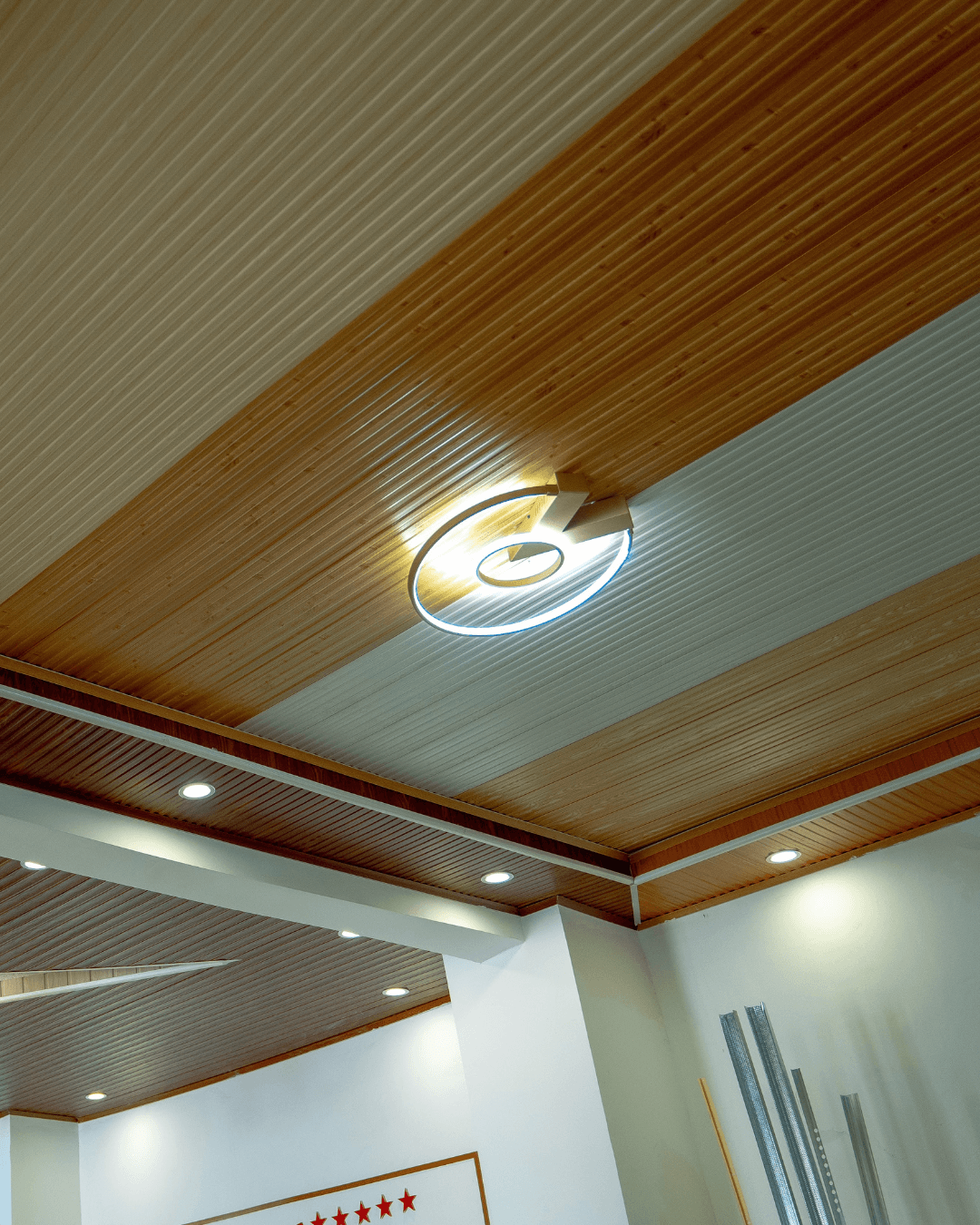
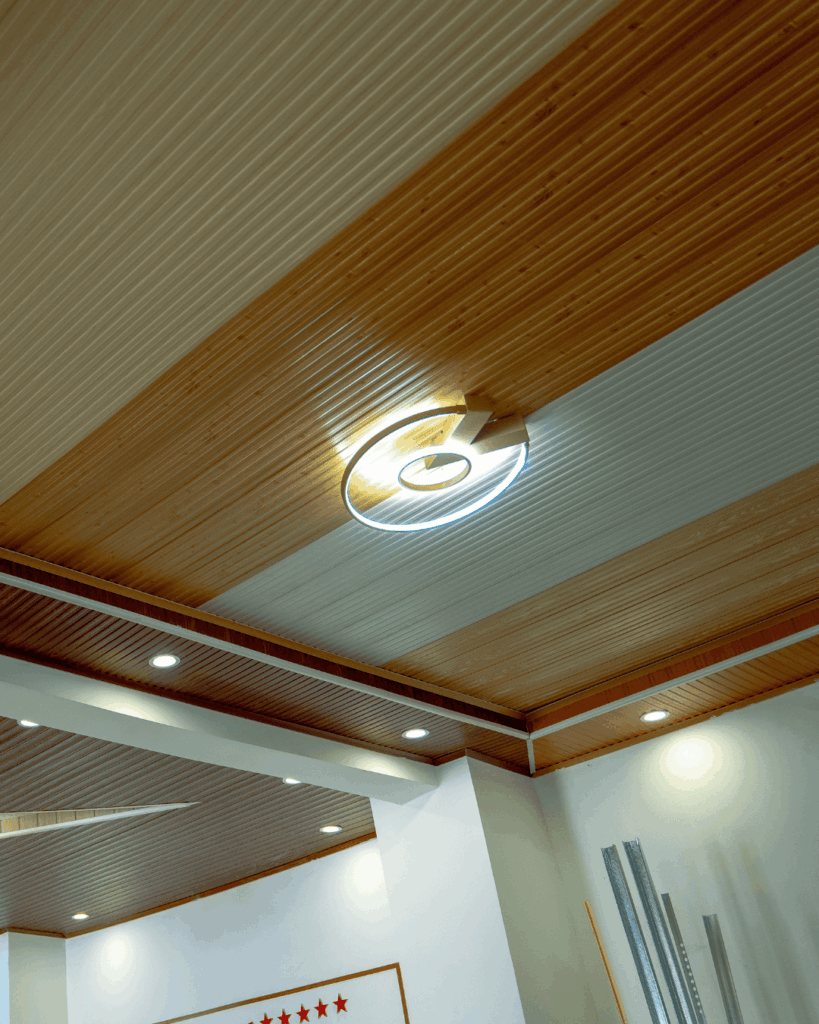
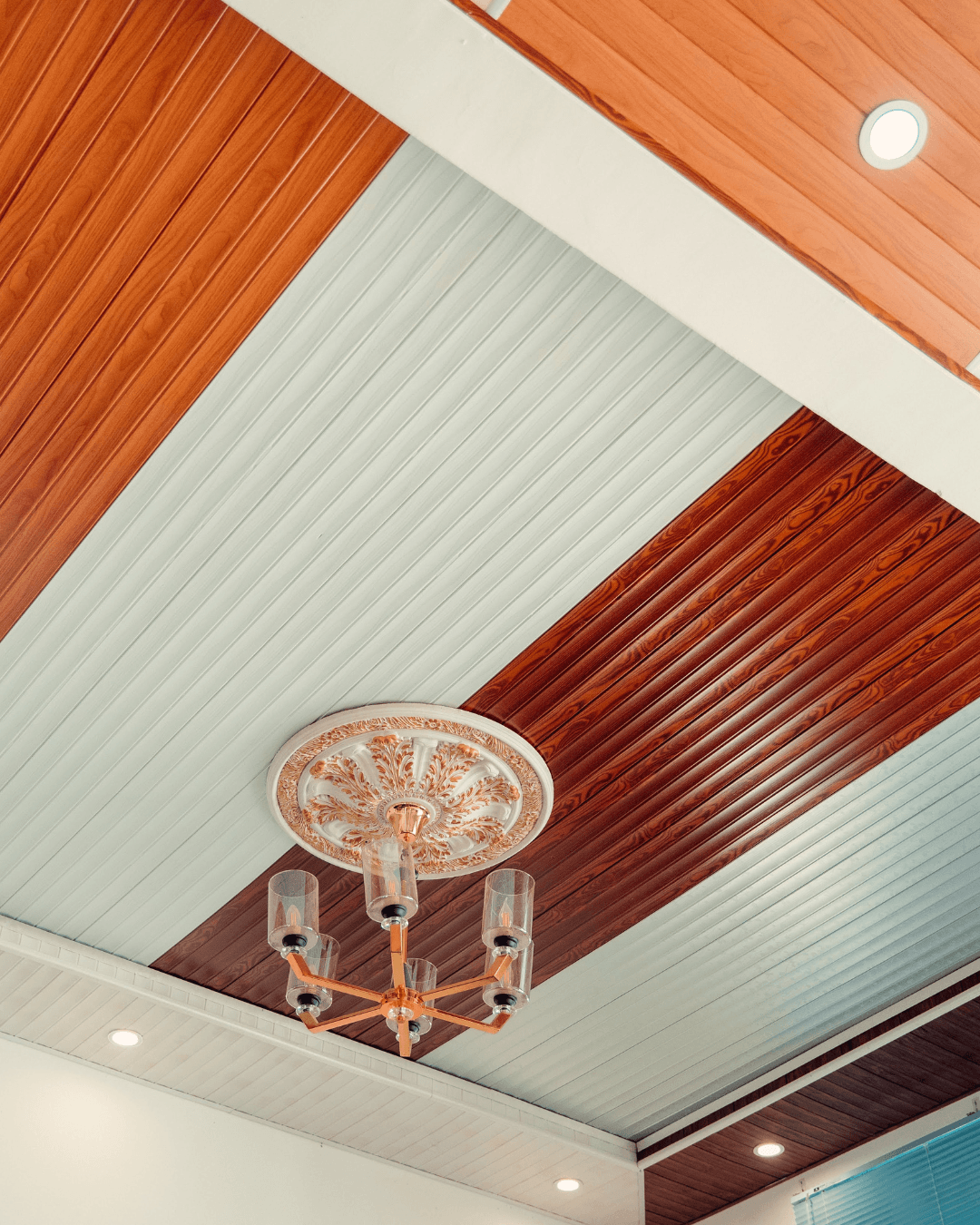
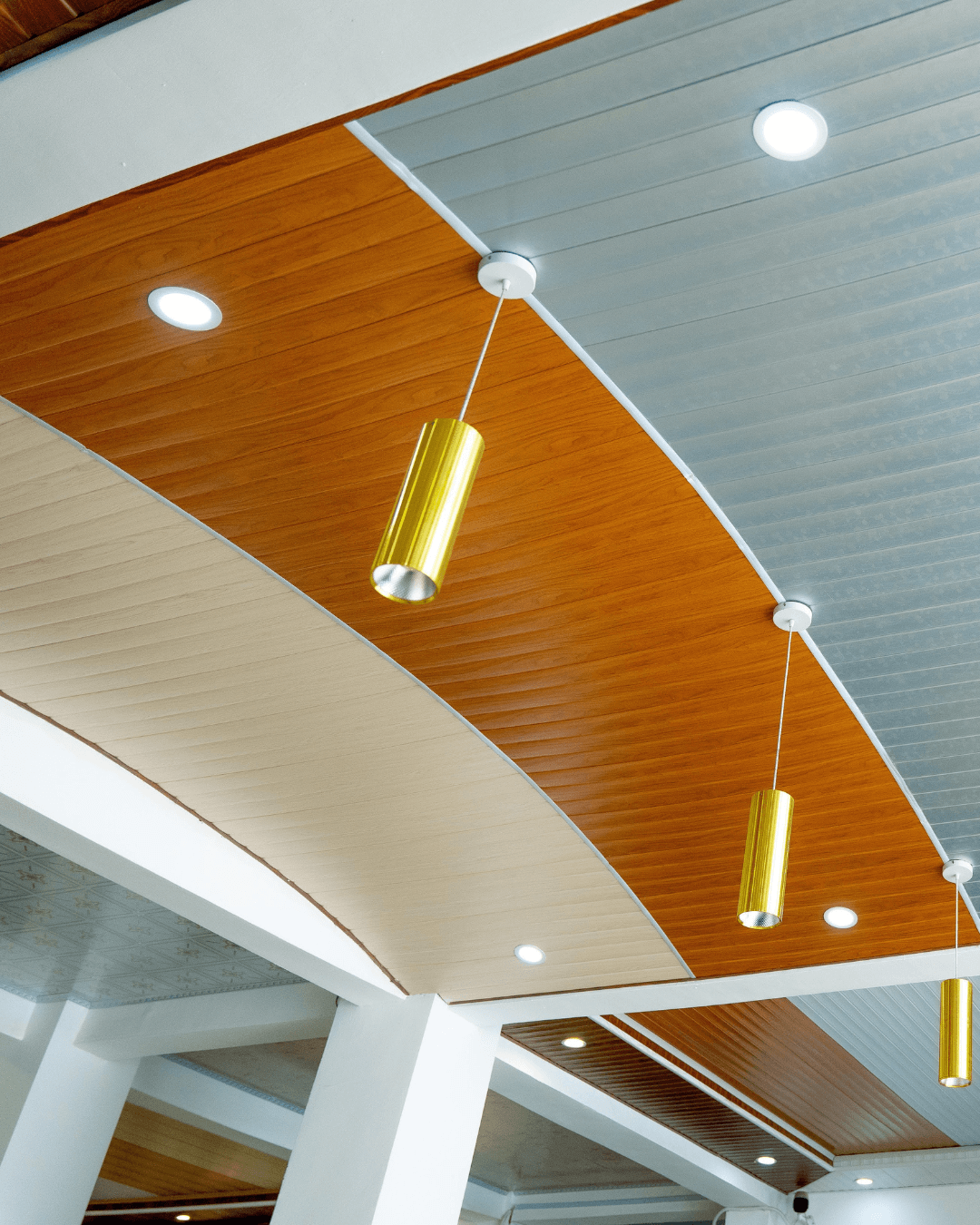
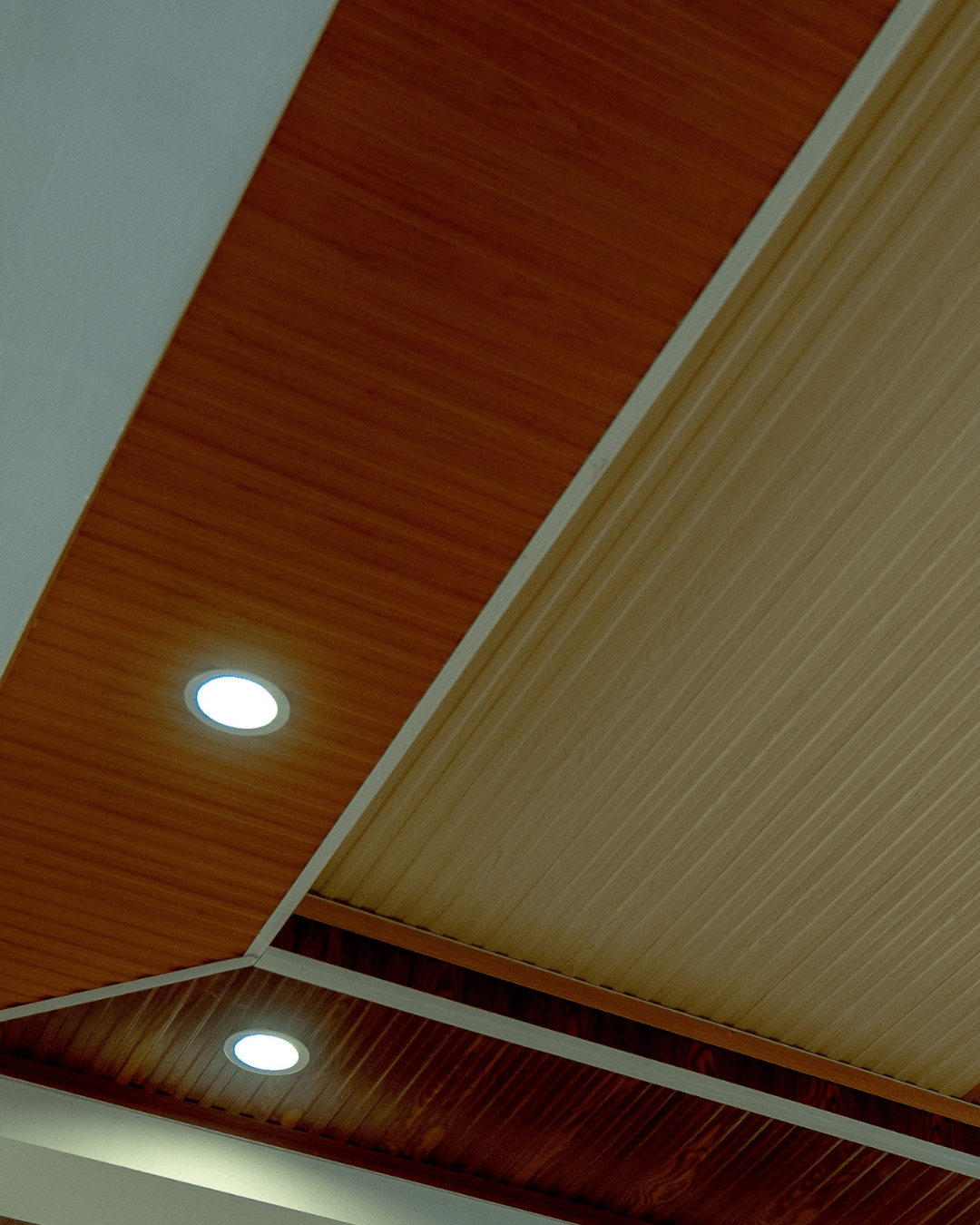
PVC ceiling panels are made from polyvinyl chloride — a rigid, lightweight material engineered for durability and moisture resistance. Panels are fitted onto a framing system using a simple locking mechanism. No wet work. No sanding. No repainting.
Finish options include woodgrain textures, glossy white, and patterned designs — making them a strong fit for modern, clean interiors.
What Is a Gypsum Ceiling?
Gypsum boards are fixed to a metal framework, then finished with jointing compound, sanded, primed, and painted. The result is a smooth, seamless surface that architects and designers often choose for its sculptural flexibility — layered drops, curves, recessed lighting, and complex geometric forms.
The tradeoff is time, labor, and ongoing maintenance.
Installation: How They Compare
PVC ceiling installation is fast. Panels are lightweight and clip into place. There’s minimal dust, no wet finishing, and no curing time.
Gypsum installation follows a longer process:
- Board fixing
- Joint filling
- Sanding
- Priming
- Painting
Each stage adds time and cost. For active renovation projects — especially occupied homes or commercial spaces — the disruption matters.
Durability and Maintenance
This is where the gap widens.
Gypsum performs well in controlled environments, but it has two known vulnerabilities: structural movement and moisture. Building settlement can cause hairline cracks. A single water leak from above can stain or sag the board — requiring spot repairs, repainting, or full section replacement.
PVC ceiling panels are 100% waterproof. Humidity doesn’t affect them. A leak above won’t ruin the finish. Cleaning requires nothing more than a damp cloth.
In Kenyan climates — where humidity, rain penetration, and temperature variation are real factors — this difference has a direct impact on how long your ceiling looks good without intervention.
Design and Appearance
Gypsum wins on design complexity. It can be shaped into curves, multi-level drops, and elaborate architectural forms. If a dramatic ceiling feature is the goal, gypsum gives designers more to work with.
PVC ceilings take a different approach. Their strength is precision and clean lines — woodgrain finishes and structured panel layouts that work exceptionally well in modern minimalist interiors, rental units, and commercial hospitality spaces.
Both can look premium. The question is which aesthetic fits your project.
Cost: Initial vs Lifetime
Gypsum installation involves more materials, more labor stages, and more skilled finishing time — which raises the initial cost. Factor in periodic repainting and moisture-related repairs over five to ten years, and the lifetime cost climbs further.
PVC involves fewer installation steps and almost no ongoing maintenance cost. For investment properties, rental apartments, and commercial builds where operational cost matters, this adds up.
Which Ceiling Works Where
| Space | Recommended Option |
|---|
| Living room with decorative design | Gypsum |
| High-end office with architectural lighting | Gypsum |
| Kitchen | PVC |
| Bathroom | PVC |
| Rental apartment | PVC |
| Hotel or hospitality space | PVC |
| Hallway or utility area | PVC |
So Which Is Better?
It depends on what you’re solving for.
If the priority is architectural expression and design flexibility, gypsum has more to offer. If the priority is durability, low maintenance, moisture resistance, and reliable long-term performance, PVC is the stronger choice — and the one most of our clients land on after seeing how it performs in real conditions.
Talk to Us Before You Decide
At Premier Wall and Floor Solutions, we supply and install both systems across Kenya. We’ll assess your space, walk you through the options, and recommend what actually makes sense for your project — not just what looks good on paper.
Call or WhatsApp +254728678753 Visit www.premierwallandfloor.co.ke
Supply and installation available across Kenya.